Most people don’t associate the Canary Islands with serious wine, which makes the reality a genuine surprise: Tenerife has five separate official wine regions on one island, vineyards growing on volcanic slopes that have never needed grafting onto resistant roots, and a small but dedicated cluster of bodegas now drawing real international interest. Our Tenerife wine route guide covers the driving side of exploring this region. This guide goes a level deeper — which specific bodegas are actually worth booking a tour at, what to expect once you’re there, and the one logistical problem every wine-focused day trip by car eventually runs into.
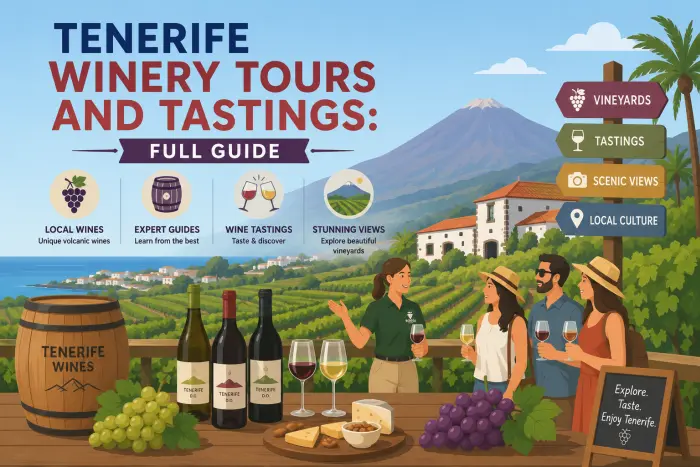
The condensed version: Tenerife’s wineries cluster mainly in the north, around Tacoronte, El Sauzal, and the Orotava Valley, with a smaller presence in the south around Güímar and Abona. Bodegas Monje, in El Sauzal, is the most-visited and easiest to book, running scheduled tours and tastings most days with advance booking genuinely necessary. Suertes del Marqués, in the Orotava Valley, has built serious international acclaim despite being a relatively young producer. Most tastings run around 90 minutes, include four wines paired with local Canarian cheeses, and cost a modest, fixed price per person. The genuine catch for anyone planning to drive themselves: tastings mean actual wine, not just a sip, so designate a driver, plan a taxi for that specific outing, or treat spitting rather than swallowing as a perfectly normal part of a proper tasting.
🌋 Why Tenerife’s Wine Is Genuinely Unusual
Two things make this island’s wine distinctive beyond the usual “we make wine here too” novelty:
- 🦠 Phylloxera, the vine disease that devastated vineyards across mainland Europe, never reached the Canary Islands. Tenerife’s vines are still grown on their own original roots rather than grafted onto resistant American stock, which is genuinely rare anywhere in the wine world today.
- 🌋 Volcanic soil plus constant trade winds give the wines a distinctive mineral character with a noticeable salinity, a combination specific to this particular growing environment.
The result is wine made from grape varieties — Listán Negro, Listán Blanco, Malvasía, and others — that most visitors have never encountered before arriving, grown in a way that’s become genuinely unusual elsewhere.
🗺️ Tenerife’s Five Wine Regions at a Glance
| Region | Location | Known For |
|---|---|---|
| 🍇 Tacoronte-Acentejo | North | The island’s oldest and largest DO; around 80% red wine production |
| 🌿 Valle de la Orotava | North | Red, white, and rosé wines with fruity, salty notes from the trade winds |
| 🍷 Ycoden-Daute-Isora | North-west | Historic “Canary wine” tradition, including the area around Icod de los Vinos |
| 🌾 Valle de Güímar | South | Mostly white wine, around 80% of total production |
| ☀️ Abona | South | The island’s southern wine region, generally smaller and less visited |
Most of the bodegas worth actually booking a tour at sit in the north, which is why a wine-focused day trip naturally pairs well with the rest of a north Tenerife road trip.
🍷 Bodegas Monje: The One Most Visitors Book First
If you only visit one winery in Tenerife, this is almost certainly it. Bodegas Monje, in El Sauzal, has been run by the same family since the 18th century, now across five generations, and sits on a hillside with genuinely striking views over the vineyards toward both Mount Teide and the Atlantic. Scheduled tours run multiple times most days, typically including a guided walk through the winery followed by a tasting of four wines, each paired with a different Canarian cheese, in a session lasting around 90 minutes. English-language tours run at specific times, often differing slightly between weekdays and weekends, and groups are kept small — booking ahead is genuinely necessary rather than a formality, since availability isn’t something you can simply check by turning up.
🏞️ Suertes del Marqués and the Valle de la Orotava
In the Orotava Valley, Suertes del Marqués has built a serious international reputation despite being a relatively recent arrival on the scene by the island’s standards. The winery focuses on minimal-intervention winemaking and what’s often described as “heroic viticulture” — a reference to the genuinely demanding, often manual labour required to farm vines on steep volcanic slopes. Tastings here tend to draw a slightly more wine-focused crowd than the larger tour groups at some other bodegas, which suits visitors specifically interested in the wine itself rather than the broader day-out experience.
🍇 More Bodegas Worth Knowing
| Bodega | Region | What Makes It Worth a Stop |
|---|---|---|
| 🏛️ Bodegas Insulares Tenerife | Tacoronte | Started as a cooperative winery, now produces some of the island’s most award-winning wines |
| 🍷 Bodegas El Lomo | Tacoronte | Over 30 years of production, blending traditional and modern techniques |
| 🚪 Cráter | El Sauzal | A self-described “garage winery” producing distinctive small-batch labels |
| 🌾 Frontos | Granadilla (south) | One of the south’s standout wineries, with a range of wine-related activities beyond a standard tour |
| 🌱 Ferrera Winery | Arafo (south, near Güímar) | A strong focus on sustainable, environmentally conscious production |
⛰️ Vilaflor: Wine at Altitude
Among the more unusual entries on the island, a winery near Vilaflor, at over 1,000 metres above sea level, focuses on organic, sustainable farming, with the altitude itself contributing a noticeable freshness and minerality to the wines. It’s a genuinely different kind of stop from the lower-altitude northern bodegas, and worth combining with a wider visit to the highest village in Spain if you’re exploring the south of the island.
🚗 The Designated Driver Problem
This is the one issue every self-drive wine day eventually runs into: a proper tasting means actually drinking wine, not a token sip, and Spain’s drink-driving limits apply exactly the same in wine country as anywhere else on the island. A few realistic ways to handle it:
- 🚗 Designate a driver for the day who tastes minimally or not at all, while everyone else enjoys the full experience.
- 🍷 Spit rather than swallow, which is completely normal practice at a proper tasting and lets the designated driver still participate meaningfully in the experience.
- 🚕 Book a taxi specifically for the winery leg of your trip, treating it as a separate outing from the rest of your self-drive holiday — our taxi vs Uber cost in Tenerife guide covers what to expect.
- 🚐 Look into an organised tour that includes transport, several of which combine multiple bodegas and other regional stops into a single guided day.
📅 How to Actually Book a Tasting
Walk-up availability at most of the island’s bodegas, particularly the more popular ones, is unreliable at best. Book online directly with the winery or through an established tour platform well before your trip, especially if you have a specific date or a larger group in mind. Confirm the language of the tour if that matters to you, since English-language sessions sometimes run at more limited, specific times than the general schedule.
🚗 Discover Tenerife – Best Car Rental Deals
Compare top-rated suppliers, no hidden fees & free cancellation included.
🧀 What to Expect at a Typical Tasting
Most bodega visits follow a broadly similar structure: a guided walk through the winery and sometimes the vineyards themselves, an explanation of the specific grape varieties and production methods used, and a seated tasting of around four wines, each paired with a different local cheese or snack. Expect the whole experience to run somewhere around 90 minutes, at a modest, fixed price per person, with most venues also selling bottles directly if you’d like to take something home. A few of the larger bodegas also have an attached restaurant or run additional cultural events, worth checking if you’d like to extend the visit into a full afternoon.
✅ Winery Visit Checklist
- 📅 Book your tasting in advance, particularly for popular bodegas like Monje.
- 🗺️ Plan a north-coast day around Tacoronte and El Sauzal if you want to visit more than one winery in a single trip.
- 🚗 Decide on your designated driver plan before you set off, not after the first pour.
- 🧀 Check whether your chosen bodega pairs food with the tasting, since this varies and affects how much of a meal you’ll need afterward.
- 🛍️ Bring some extra luggage space if you’re planning to buy a bottle or two to take home.
- 🌾 Consider pairing a winery visit with a local farmers’ market — our Tenerife markets by car guide covers the Tacoronte market specifically, which sells local wine alongside other regional produce.
❓ Frequently Asked Questions
Do I need to book a winery tour in Tenerife in advance? Yes, generally. Particularly at popular bodegas like Monje, walk-up availability isn’t reliable, and booking ahead is the only way to guarantee a specific time slot, especially for an English-language tour.
Which is the most popular winery to visit in Tenerife? Bodegas Monje, in El Sauzal, is the most-visited, thanks to its long family history, striking views, and well-established tour and tasting programme running most days of the week.
How long does a typical winery tasting take in Tenerife? Around 90 minutes is typical for a standard tour-and-tasting experience, covering a guided walk through the winery and a seated tasting of around four wines paired with local cheeses.
Is Tenerife wine actually good, or just a novelty? It’s genuinely well-regarded, with some producers, particularly Suertes del Marqués, earning real international acclaim. The island’s ungrafted, phylloxera-free vines and volcanic terroir give the wines a distinctive character that’s become rare elsewhere in the wine world.
How do I handle driving if I want to taste wine at multiple bodegas? Designate a driver who tastes minimally, spit rather than swallow at tastings (a completely normal practice), book a taxi specifically for the winery leg of your trip, or join an organised tour that includes transport.
Are there wineries in the south of Tenerife, or are they all in the north? Most of the island’s well-known, frequently visited bodegas are in the north, around Tacoronte and the Orotava Valley, but the south has its own wineries too, including notable options around Güímar and Abona.
Can I buy wine directly at the bodegas I visit? Yes, most wineries sell bottles on-site, making it easy to take a few home as a souvenir of the specific producer and grape varieties you tasted during your visit.
Is a winery tour suitable for visitors who don’t know much about wine? Yes — most tours are designed for a general audience, explaining the local grape varieties, volcanic terroir, and winemaking process in accessible terms, regardless of how much wine knowledge you start with.
🏁 Final Verdict: Book Ahead, Plan the Drive Home
Tenerife’s wine scene rewards genuine curiosity — five distinct regions, ungrafted vines, and a handful of bodegas now earning real international respect, all within a manageable drive of each other in the north of the island. Book your tasting ahead of time, and sort out who’s driving before you sit down to the first pour, and the rest of the day takes care of itself.
👉 Compare car hire deals in Tenerife for a wine country day done properly. This guide is part of our full Tenerife car hire guide — for a historic stop nearby, see our La Laguna by car guide.