Most travellers sign this document in under a minute, in a queue, at the end of a long flight, without reading a single line beyond where to initial. The rental agreement isn’t a formality, it’s the actual contract that decides every single dispute covered elsewhere on this site: what you owe if something’s damaged, who’s allowed to drive, what “full tank” really means, and what voids every protection you paid for. You don’t need to read all of it word for word at the desk, but knowing what each section is actually for means you know exactly where to look if a question comes up later.
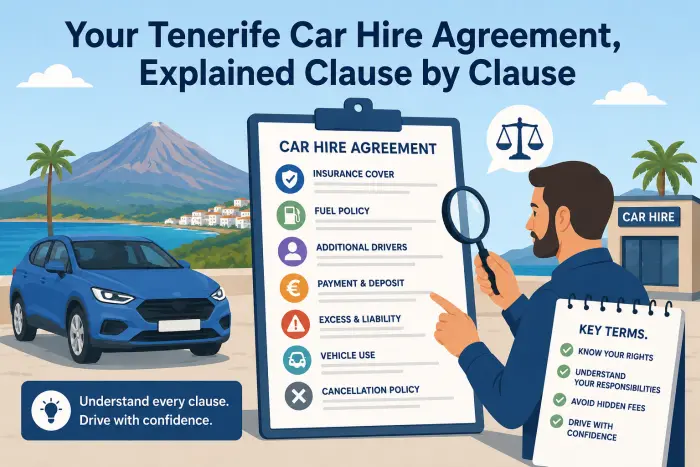
The core sections, in plain terms: the excess/deductible clause sets the maximum you’d pay toward damage regardless of fault, and it applies even with a damage waiver, a waiver reduces your exposure, it doesn’t eliminate it, and it’s genuinely not the same thing as an insurance policy. The prohibited use clause lists activities, off-roading, unauthorised drivers, taking the car off the island without permission, that void every single protection on the agreement if breached, not just the specific rule broken. The fuel policy, mileage terms, and authorised driver list are the sections responsible for most of the disputes that show up on this site’s other guides. Everything else, vehicle description, rental period, deposit amount, is largely administrative, worth a glance to confirm it matches what you booked, but rarely the source of a genuine problem.
📋 The Sections, in the Order They Usually Appear
| Section | What It Actually Covers | Why It Matters |
|---|---|---|
| Renter and vehicle details | Your name, licence details, the specific car, starting odometer | Confirms the agreement matches your actual booking |
| Rental period | Exact pickup and return date/time | The baseline for any late return or early-return question |
| Charges summary | Daily rate, taxes, add-ons, total estimated cost | Should match what you were quoted, not a new figure |
| Security deposit | The amount held, and how it’s released | Covered in detail in our no-deposit car hire guide |
| Excess/deductible and damage waiver | Your maximum financial exposure for damage, and what reduces it | The section this article spends the most time on, below |
| Authorised drivers | Who is legally permitted to drive the car | Anyone not listed here isn’t covered if they drive |
| Fuel policy | Full-to-full, full-to-empty, or prepaid fuel terms | A leading cause of end-of-rental charge disputes |
| Mileage terms | Any daily or total km limit, or confirmation of unlimited mileage | See our unlimited mileage guide |
| Prohibited use / exclusions | Activities that void all protection if breached | The single most consequential clause on the whole document |
| Vehicle condition notes | Pre-existing damage marked at collection | See our collection inspection checklist guide |
🛡️ Excess, Deductible, and Damage Waiver: The Section Worth Reading Most Carefully
This is genuinely the clause that matters most, and it’s worth understanding three separate ideas clearly rather than treating them as one thing:
- The excess (or deductible) is the maximum amount you’re responsible for if the car is damaged or stolen, regardless of who was actually at fault. This figure exists on every rental, and it’s set out explicitly in the agreement.
- A damage waiver is not insurance. It’s the rental company’s own contractual agreement to waive their right to recover some or all of that excess amount from you, under specific conditions. This distinction matters because a waiver can be voided by the same exclusions that would void insurance, even though it isn’t technically a policy.
- Even with a waiver purchased, the excess still technically applies. The waiver is what determines whether the company actually pursues you for it, not whether the figure exists in the first place. Our excess insurance guide covers whether paying for this protection is worth it for your specific trip.
🚫 Prohibited Use: The Clause That Voids Everything Else
This is the section with the widest-reaching consequences on the entire document, and it’s worth reading properly rather than skimming. A prohibited use clause typically lists specific activities, driving under the influence, off-road driving, allowing an unauthorised person to drive, taking the vehicle somewhere the agreement doesn’t cover, and states plainly that breaching any one of them voids every protection on the agreement, not just the specific rule that was broken. This includes damage waivers, extended cover, and any other optional product purchased at the desk. It’s the same principle behind our drop-off on a different island guide, taking a car somewhere the agreement doesn’t authorise isn’t treated as a minor technicality, it’s specifically the kind of breach this clause is designed to catch.
👥 Authorised Drivers: Why This List Is Not Optional
Only the people specifically named on the agreement are legally covered to drive the vehicle. This sounds obvious, but it catches out travellers regularly, a partner or friend taking a turn at the wheel “just for a bit” without being added at the desk means that person isn’t an authorised driver under the agreement, with real consequences if anything happens while they’re driving. Our additional driver guide covers how to add someone properly, including any fee involved, it’s a small cost against a genuinely significant risk if skipped.
⛽ Fuel Policy: Read the Exact Wording, Not Just the Concept
“Full tank” sounds unambiguous until you notice the specific wording your agreement actually uses. Full-to-full means you return the car with a full tank, matching how it was given to you, the cheapest option if you manage your fuel stops well. Some agreements instead use a prepaid fuel arrangement, where you’re charged for a full tank upfront and can return the car at any fuel level, though this rarely works out cheaper unless you’re confident you’ll use most of the tank. Whichever policy applies, it’s stated explicitly in this section, and it’s worth confirming verbally at the desk in addition to reading it, since this is one of the most common sources of a disputed charge at return.
🛣️ Mileage: Confirm the Actual Wording, Not an Assumption
The mileage section either states a specific daily or total kilometre limit, or explicitly confirms unlimited mileage. Don’t assume based on general expectations for your rental length, read the actual figure, or the actual word “unlimited,” printed on your specific agreement. This matters more for longer rentals or full-island road trips than for a short, local rental, but it costs nothing to confirm regardless of your plans.
📝 Vehicle Condition: Where Your Own Photos Matter Most
The agreement typically includes a diagram or a section for noting existing damage at collection. This is the exact document your own collection photos are meant to support or challenge, if you spot damage that isn’t marked, get it added before you sign, since the agreement’s own notes are what the company will refer back to at return, not your memory of the conversation at the desk.
🧾 What to Actually Do With All of This at the Desk
You don’t need to read every clause word for word while a queue forms behind you. A realistic approach:
🚗 Discover Tenerife – Best Car Rental Deals
Compare top-rated suppliers, no hidden fees & free cancellation included.
- Confirm the vehicle, dates, and total price match your booking — this is quick and catches most administrative errors immediately.
- Ask directly what your excess is, and what waiver, if any, you’ve purchased or are being offered.
- Add every driver who’ll actually be driving, not just the person collecting the car.
- Confirm the fuel policy verbally, matching what’s written.
- Skim the prohibited use section specifically, since this is the one clause that can undo every other protection on the page.
- Do your walkaround and photos before signing, not after, so any damage discussion happens while you’re both still at the car.
✅ Rental Agreement Checklist
- Confirm the vehicle, dates, and price match your booking before signing.
- Understand your specific excess figure, separate from whether you’ve bought a waiver.
- Read the prohibited use section, since it’s the clause that voids everything else if breached.
- Add every actual driver to the agreement, not just the person at the desk.
- Confirm the fuel policy wording matches what you were told verbally.
- Check the mileage terms explicitly, rather than assuming unlimited.
- Photograph the car before signing, and make sure any existing damage is noted on the agreement itself.
❓ Frequently Asked Questions
Is a damage waiver the same as insurance? No. A damage waiver is the rental company’s own contractual agreement to waive their right to recover some or all of the excess from you, under specific conditions. It isn’t an insurance policy, even though it serves a similar practical purpose.
Do I still owe the excess if I have a damage waiver? The excess figure still technically exists on the agreement regardless of any waiver purchased. The waiver determines whether the company actually pursues you for that amount under normal circumstances, not whether the figure is removed from the contract entirely.
What happens if someone drives the car who isn’t listed as an authorised driver? That person isn’t covered under the agreement’s protections at all. If anything happens while an unauthorised driver is at the wheel, the standard cover and any waivers can be voided, leaving you personally liable.
Why does the prohibited use clause matter so much? It typically states that breaching any listed activity voids every protection on the agreement, not just the specific rule broken. This makes it the single most consequential section on the document, since it can undo cover you separately paid for.
What’s the difference between full-to-full and prepaid fuel? Full-to-full means returning the car with a full tank, matching how you received it, generally the cheapest option if managed well. Prepaid fuel means paying for a full tank upfront and returning the car at any level, which rarely works out cheaper unless you use most of the tank.
Should I read the entire agreement before signing? A full word-for-word read isn’t always practical at a busy desk, but confirming the vehicle and price match your booking, understanding your excess, checking the prohibited use section, and adding all actual drivers covers the parts most likely to matter later.
What should I do if I disagree with something in the agreement before signing? Raise it at the desk before signing, since the agreement is much easier to correct at that point than afterward. If a dispute arises after your rental has already ended, our escalation guide covers the process for resolving it.
Does the rental agreement matter if I booked through a comparison site? Yes — regardless of how you booked, the rental agreement you sign at the actual desk is the document that governs your specific rental, separate from whatever terms appeared on the booking platform.
🏁 Final Verdict: Five Minutes at the Desk, Not a Legal Deep-Dive
You don’t need to read every word of a Tenerife car hire agreement to protect yourself, you need to know which five or six sections actually matter and glance at those specifically before signing. The excess, the prohibited use clause, the authorised drivers, and the fuel policy account for the overwhelming majority of disputes covered elsewhere on this site, and all four take less than five minutes to confirm properly.
👉 Compare car hire deals in Tenerife from companies with clear, straightforward agreements. This guide is part of our full Tenerife car hire guide — if something in your agreement wasn’t honoured after the fact, see our dispute and complaint guide for the escalation path, and see our hidden fees guide for the charges most often missed at the desk.