Most people booking Puerto de la Cruz pick a hotel off a map without thinking about what that map actually means once they’ve got a rental car parked outside. And that’s the thing nobody tells you before you land: this isn’t one resort with a few hotel rows. It’s five or six distinct neighbourhoods stitched together along the coast, and which one you land in changes your first three days more than almost anything else you’ll decide about this trip.
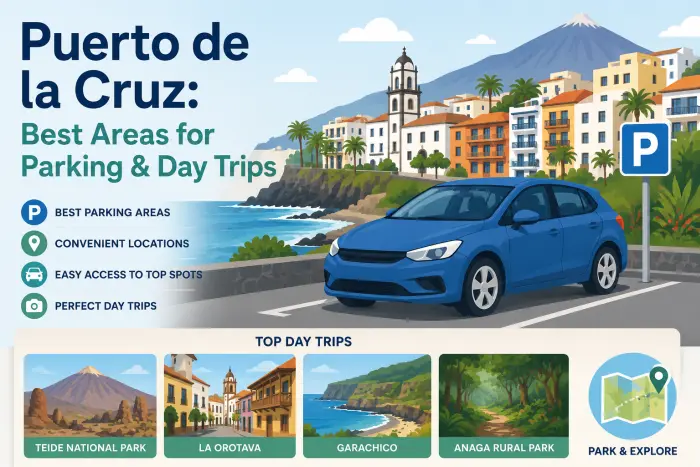
Stay in the wrong pocket of town and you’ll spend your first morning circling for parking before you’ve even had coffee. Stay in the right one and the car practically disappears into the background — you grab it when you want Teide or Garachico, and otherwise it just sits there, out of the way, not costing you anything in stress.
This guide breaks down the real neighbourhoods of Puerto de la Cruz — not the marketing names, the actual pockets locals and repeat visitors talk about — and tells you honestly which one fits which kind of trip. For the mechanics of driving here (parking zones, local car hire offices, day trip routes), the complete Puerto de la Cruz by car guide covers that in full; this one is about the decision that comes before all of it — where you actually sleep.
Where Should You Stay in Puerto de la Cruz?
If you want to park once and forget about it, La Paz is the easiest base for drivers — wide residential streets, mostly free parking, five minutes from the TF-5. If walkability matters more than parking convenience, the Casco Antiguo (Old Town) puts you inside everything on foot, but you’ll pay for a car park or walk from free spaces further out. Families leaning on Loro Parque and Playa Jardín do well in Punta Brava. Couples wanting quiet and character over resort polish tend to prefer La Ranilla, the old fishing quarter.
The rest of this guide explains why, area by area.
Puerto de la Cruz Neighbourhood Map — The Short Version
| Area | Character | Parking | Distance to Old Town | Best For |
|---|---|---|---|---|
| Casco Antiguo (Old Town) | Historic centre, dense, walkable | Tight — paid car parks | 0 min | First-timers who want everything on foot |
| La Paz | Residential, green, near Botanical Garden | Easy, often free | 20–25 min walk / 5 min drive | Drivers doing daily day trips |
| Punta Brava | Near Loro Parque and Playa Jardín’s west end | Moderate — hotel + street mix | 10–15 min walk | Families |
| La Ranilla | Old fishing quarter, boutique feel | Limited, similar to Old Town | 5–10 min walk | Couples wanting character over convenience |
| San Telmo / Seafront | Along the Avenida de Colón, close to Lago Martianez | Paid seafront parking | 5–10 min walk | Visitors prioritising the promenade and pools |
Casco Antiguo (Old Town): Everything on Foot, Nothing Easy for the Car
The Old Town is why people fall in love with Puerto de la Cruz in the first place — narrow streets predating the tourist industry by centuries, the Plaza del Charco a two-minute stroll from most hotels, Playa Jardín within walking distance.
It’s also the hardest part of town to park a car in. The underground car park near Plaza del Charco is the practical option for a full day, and it’s paid. The free alternative — parking in the residential streets climbing the hillside above the centre — works, but means a 10–15 minute walk each way, often uphill on the return.
Who this suits: visitors who plan to explore the town on foot and treat the car as an occasional tool for day trips rather than daily transport. If your itinerary is two or three big driving days (Teide, Anaga, the west coast) and otherwise walking, the Old Town’s parking friction barely registers. If you were hoping to load the car with beach gear every morning, it’ll wear on you by day three.
La Paz: The Neighbourhood Built for People Who Actually Drive
Twenty minutes’ walk from the Old Town — five by car — La Paz sits around the Botanical Garden, on wider, quieter, more residential streets than the tourist core. It’s less photogenic than the seafront, and that’s exactly why it works for drivers: parking here is genuinely easy, frequently free, and rarely requires circling the block twice.
La Paz also sits closer to the TF-5 on-ramp, which matters more than it sounds like it should. Every day trip in this guide’s cluster — Teide via the TF-21, Anaga Rural Park, Garachico and Icod de los Vinos — starts a few minutes faster from here than from the Old Town, because you’re not first navigating out of the historic centre’s one-way system.
Who this suits: anyone planning to drive most days. Families with family car hire needs who don’t want the daily parking negotiation, and repeat visitors who’ve already done the Old Town on a previous trip and want convenience over atmosphere this time.
Punta Brava: The Practical Choice for Families Near Loro Parque
West of the centre, Punta Brava sits close to Playa Jardín’s quieter end and a five-minute drive from Loro Parque — genuinely useful if that park is on your itinerary, since it lets you avoid the narrow residential approach roads twice in one day.
Parking here is a mix: some hotels include it, others rely on street spaces that are less contested than the Old Town but not as generous as La Paz. It’s a reasonable middle ground rather than a standout on either front.
Who this suits: families building a trip around Loro Parque and the western beaches, who want proximity to both without paying the Old Town’s parking premium.
La Ranilla: Boutique Character, Old Town Parking Problems
The old fishing quarter, recently restored into a pocket of boutique guesthouses and small independent cafés, La Ranilla sits just south of the harbour — close enough to the Old Town to share its parking difficulties, distinct enough in character to feel like a different neighbourhood entirely.
This is less a driver’s choice and more a where-to-stay choice that happens to come with a car attached. If the appeal is the quieter, more local feel over polished resort infrastructure, the parking trade-off is the same one you accept in the Old Town.
🚗 Discover Tenerife – Best Car Rental Deals
Compare top-rated suppliers, no hidden fees & free cancellation included.
Who this suits: couples and longer-stay visitors prioritising atmosphere, who are comfortable treating the car the same way Old Town guests do — parked and mostly ignored except for excursion days.
San Telmo and the Seafront: Convenient for the Pools, Same Parking Story
Running along the Avenida de Colón toward Lago Martianez, this stretch puts you closest to the César Manrique seawater pools and the promenade. Parking follows the paid seafront system described in the full parking breakdown — manageable, but not free, and not dramatically easier than the Old Town itself.
Who this suits: visitors whose priority is the promenade and pools over day-tripping, where the car sits idle more often than not.
Do You Even Need a Car If You’re Staying in Puerto de la Cruz?
Genuinely, it depends on the shape of your trip. Puerto de la Cruz itself — the beaches, the Old Town, Lago Martianez — is entirely walkable regardless of which of these neighbourhoods you pick. Where a car earns its cost is everything outside the town: Teide via the TF-21, the lava pools at Garachico, the ancient forest of Anaga, the west coast run to Masca. None of those are reachable by bus on any reasonable timetable, and taxis for a full day trip add up fast.
If your plan is resort-and-beach only, skip the car and save the parking headache entirely — a taxi to Loro Parque and the bus network covers the rest. If you want the north of Tenerife beyond the postcard shot of Playa Jardín, the car is worth it, and the neighbourhood you choose determines how much friction that decision costs you.
Choosing Your Area by Trip Type
First-time visitors wanting everything walkable: Casco Antiguo. Accept the parking trade-off in exchange for having the whole town at your feet.
Repeat visitors or anyone doing three-plus driving days: La Paz. The parking ease compounds daily — small savings in time and stress that add up across a week.
Families with Loro Parque on the list: Punta Brava, for the shorter drive and easier drop-off.
Couples wanting quiet and local character: La Ranilla, accepting Old Town-level parking in exchange for atmosphere.
Visitors centring their trip on the seafront pools: San Telmo, where the car is a secondary consideration to the promenade itself.
Frequently Asked Questions
What is the best area to stay in Puerto de la Cruz if I have a rental car?
La Paz is the easiest base for drivers — wider residential streets, frequently free parking, and quick access to the TF-5 for day trips. The Old Town remains the best choice for walkability, but parking there requires either a paid car park or a walk from free spaces above the centre.
Do hotels in Puerto de la Cruz include parking?
It varies by property and area. Hotels in La Paz and along the road toward Loro Parque are more likely to include on-site parking. Several Old Town hotels don’t, which means budgeting for a nearby paid car park as part of your daily routine. Always confirm parking directly with your accommodation before booking if it matters to your plans.
Is the Puerto de la Cruz Old Town walkable without a car?
Yes — the Old Town, Playa Jardín, Plaza del Charco and Lago Martianez are all within easy walking distance of each other. A car only becomes necessary for trips beyond the town itself, such as Teide, Anaga or the west coast.
Which area of Puerto de la Cruz is best for families?
Punta Brava, for its proximity to Loro Parque and the western stretch of Playa Jardín. La Paz is also a solid family option if daily driving to attractions like Teide or the beaches further afield is part of the plan, thanks to its easier parking.
Is La Paz a good base for exploring northern Tenerife by car?
Yes. Its position near the TF-5 on-ramp and generally available residential parking make it one of the most convenient bases in Puerto de la Cruz for day trips to Teide, Anaga and the northern coast.
How far is Loro Parque from different areas of Puerto de la Cruz?
From Punta Brava, it’s a five-minute drive or a manageable walk. From the Old Town or La Paz, expect roughly a ten-minute drive. Parking near the park entrance is tighter than elsewhere in town, so arriving early is worth it regardless of where you’re staying.
Can I park for free near my hotel in Puerto de la Cruz?
In La Paz, yes, in most cases — residential streets there are largely unrestricted. In the Old Town and La Ranilla, free parking exists but usually means the residential streets above the centre rather than anywhere immediately next to your hotel. The full parking zone breakdown covers the colour-coded system in detail.
The Bottom Line
Puerto de la Cruz doesn’t have a wrong neighbourhood — every one of these areas puts you within reach of the coast, the Old Town and the north’s best day trips. What changes is how much daily friction your car adds to the trip. Choose for walkability and accept the parking trade-off, or choose for convenience and give up a little atmosphere. Either way, once you’re settled, the rest of this guide picks up from here — parking specifics, local car hire offices, and the day trips that make having a car in Puerto de la Cruz worth it in the first place.