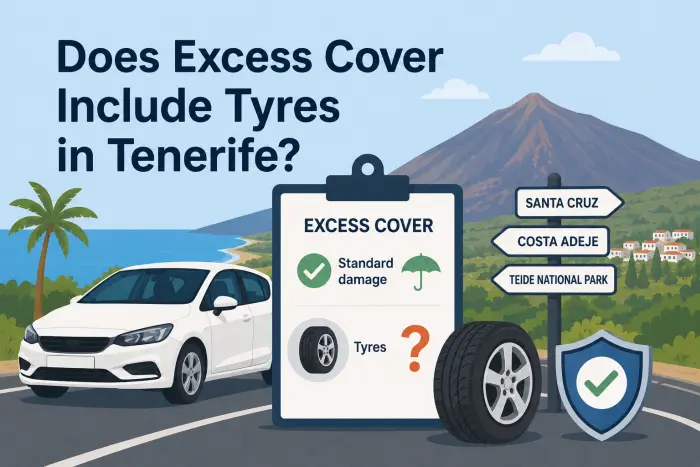
Excess cover in Tenerife doesn’t automatically include tyres, the windscreen, or the underbody of the car, and this genuinely varies by company rather than following one standard rule. Some operators bundle all three into their standard excess reduction, others exclude them entirely and sell them as a separate add-on, and a few sit somewhere in between. It’s one of the most commonly missed details when comparing quotes, since two policies that look identically priced can leave you exposed to very different bills if a stone chips your windscreen on the way to Masca, and the marketing page rarely spells this out clearly enough to compare properly before you book.
What’s Actually Covered
- 🛞 Tyre and wheel damage is one of the most frequently excluded items from standard excess cover, even when everything else in the policy sounds comprehensive.
- 🪟 Windscreen chips and cracks are common on Tenerife’s roads, particularly on unpaved stretches near viewpoints, and coverage for this varies significantly between companies.
- ⚙️ Undercarriage damage, scraping the underside on a speed bump or rough track, is sometimes bundled in, sometimes charged separately, worth confirming rather than assuming.
- 📄 The rental agreement’s small print, not the marketing page, is where these exclusions actually live, so it’s worth reading before you sign, not after a stone chip appears.
- 💬 Asking directly at the counter, “does this cover tyres, glass, and the underbody specifically,” gets a clearer answer than trusting a general “full cover” label.
Why Do These Three Components Get Excluded So Often?
Because they’re the parts of a car most commonly damaged by ordinary road conditions rather than collisions, which makes them expensive for rental companies to cover unconditionally. A cracked windscreen from a passing truck kicking up a stone, a scraped underbody from an unmarked speed bump, or a punctured tyre from debris on a mountain road, none of these involve an accident in the usual sense, but they’re common enough on Tenerife’s roads that insurers price them separately or exclude them to keep the headline excess cover cheaper. From a purely commercial standpoint, it lets a company advertise a low, attractive excess figure while still protecting themselves against the wear-and-tear-adjacent claims that would otherwise eat into that margin constantly.
Does Coverage Actually Differ Between Rental Companies?
Yes, meaningfully, and this is worth checking before you assume “full cover” means everything. Some local operators explicitly include underbody damage in their standard cover, positioning it as a selling point against competitors who don’t. Others cover glass and tyres only as a paid add-on, separate from the main excess waiver, which means a policy advertised as removing your excess can still leave you liable for a windscreen chip or a torn sidewall. There’s no island-wide standard here, it genuinely depends on the specific company and the specific policy tier you’ve booked, and the only reliable way to know is to check the actual terms rather than compare headline excess figures alone.
| Component | Commonly Included | Commonly Excluded or Extra |
|---|---|---|
| Windscreen/glass | Some standard packages | Often a separate add-on |
| Tyres and wheels | Less common in base cover | Frequently excluded unless upgraded |
| Undercarriage | Varies significantly by company | Sometimes bundled, sometimes not |
| Standard body panels | Usually included in any excess cover | Rarely excluded |
Which Roads Actually Make This Matter Most?
Routes with loose gravel, unpaved pull-offs, or rough surface transitions, the kind you’ll find near viewpoints on narrower mountain roads rather than the main motorways. The stretch toward Masca and similar routes involve tighter bends and rougher shoulder surfaces where a tyre sidewall or the underbody is more likely to take a hit than on a straight coastal drive. This doesn’t mean avoid these roads, they’re often the best parts of a Tenerife trip, it means the component-level exclusions matter more here than on a typical resort-to-airport transfer, and it’s worth factoring that into your route planning as much as your insurance shopping.
How Do You Actually Find Out What’s Covered Before You Book?
Read the specific policy wording rather than the marketing summary, and ask directly if it isn’t clear. Terms like “comprehensive,” “full cover,” or “zero excess” don’t reliably tell you whether tyres, glass, and the underbody are included, since these are marketing labels rather than standardized terms. The safest approach is asking the specific question, “does this include tyre, windscreen, and undercarriage damage,” either when booking or at the counter, rather than assuming a broad label covers everything. Write the answer down or screenshot the confirmation if you can, since a verbal assurance at the counter is far harder to rely on later than something documented at the time. If you’re weighing whether excess cover is worth buying at all, this component-level detail is exactly the kind of thing that should factor into which specific policy you choose, not just whether you buy one.
What Actually Happens If You Get a Flat Tyre Mid-Trip?
Practically speaking, most rental cars carry either a spare wheel, a repair kit, or rely on roadside assistance rather than leaving you stranded, regardless of whether tyre damage is covered by your excess policy. The coverage question determines who pays for the tyre itself, not whether you’re stuck on the roadside, since breakdown assistance is typically a separate part of your rental agreement from the excess and damage cover. It’s worth knowing both pieces before you’re dealing with a flat on a quiet stretch of road, rather than discovering the distinction in the moment, phone signal permitting, in the exact spot where you’d least want to be sorting out contract details for the first time.
🚗 Discover Tenerife – Best Car Rental Deals
Compare top-rated suppliers, no hidden fees & free cancellation included.
What Happens If Damage to One of These Components Isn’t Covered?
You’ll likely be liable for the repair cost directly, which for a windscreen or a set of tyres can be a genuinely significant charge even with excess cover otherwise in place. This is exactly the scenario where thorough pickup documentation matters most, since a dispute over whether damage was pre-existing or caused during your rental becomes much harder to resolve fairly without clear before-and-after evidence. It’s also worth understanding how the broader insurance mechanics work so you know exactly which policy layer, the company’s own waiver or standard liability cover, would apply if one of these exclusions catches you out, rather than working it out for the first time at the return desk with a bill already in front of you.
FAQ
Does standard rental insurance in Tenerife cover tyre damage? Not always, tyre and wheel damage is one of the most commonly excluded items even when other excess cover is included. Check the specific policy wording rather than assuming it’s covered by default.
Is windscreen damage typically already included in the standard excess cover? It varies by company. Some include it in standard cover, others sell it as a separate add-on, so it’s worth confirming specifically rather than assuming a “full cover” label includes glass by default.
What counts as undercarriage damage? Scraping or damaging the underside of the car, typically from a speed bump, rough track, or unpaved surface transition. Coverage for this varies more between companies than coverage for standard body panel damage does, which is exactly why it’s worth a specific question rather than an assumption.
How can I tell if my specific policy covers all three? Ask the rental company directly, “does this cover tyres, windscreen, and undercarriage damage specifically,” rather than relying on general terms like “comprehensive” or “zero excess,” which don’t reliably indicate component-level coverage. A specific yes-or-no answer to that exact question is worth far more than a glossy summary of “full protection” on a booking page.
Are these exclusions the same for third-party excess insurance as for the rental company’s own waiver? Not necessarily, third-party policies have their own separate terms and exclusions, which may differ from what the rental company’s own waiver covers. It’s worth checking both if you’re relying on external cover, since assuming they mirror each other exactly is a common and avoidable mistake.
Does avoiding rough roads reduce my risk enough to skip worrying about this? It helps, but even well-maintained roads can produce a stray stone chip or a pothole-related tyre issue, so it’s worth understanding your coverage regardless of which routes you’re planning, since the one time it matters is rarely the trip you specifically prepared for.
What should I do if I’m charged for tyre or glass damage I believe was pre-existing? Refer back to your pickup photos and documentation immediately, and dispute the charge formally if the evidence supports your case, rather than assuming there’s nothing you can do once a charge appears. Rental companies generally have a formal dispute process precisely because these disagreements happen often enough to need one, so using it is a normal step, not an unusual escalation.