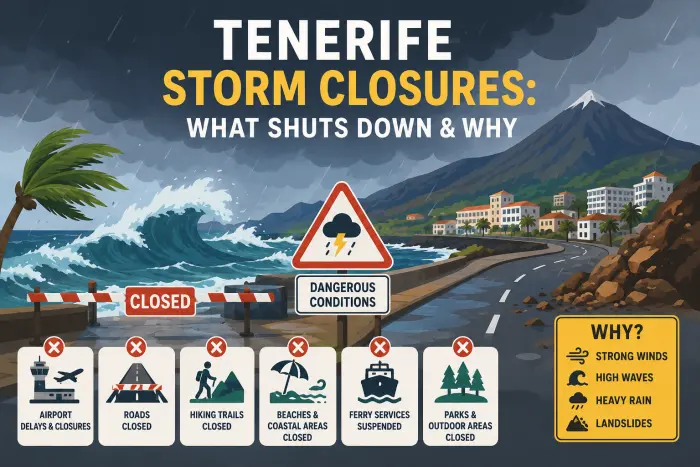
Tenerife occasionally activates a full island-wide emergency plan (PEIN) during severe weather, and when it does, specific roads and entire areas of the island can close with only a few hours’ notice. It doesn’t happen often, but when it does, it’s genuinely significant: past activations have closed the road to Punta de Teno entirely, shut the whole of Teide National Park, and suspended access to hiking trails and forest tracks island-wide. If you’re driving during one of these events, knowing what’s actually happening, and what isn’t, makes a real difference to how you plan the rest of your day, rather than finding out the hard way at a barrier you didn’t expect.
What Actually Happens
- 🚨 PEIN (Plan de Emergencias Insular) is Tenerife’s island-wide emergency protocol, activated by the Cabildo (island government) ahead of forecast severe weather, not after it’s already causing damage.
- 🛣️ Specific roads can close entirely during an activation, the road to Punta de Teno is a repeat example, since its cliffside route is particularly exposed.
- 🌋 Teide National Park can close completely during a serious weather event, including snow closures at altitudes well below the summit.
- 🥾 Hiking trails, forest tracks, and recreational areas across the island are typically closed together, not selectively, during a full activation.
- 📱 These closures are usually announced with several hours’ lead time rather than happening without warning, which gives you a real window to adjust plans.
What Exactly Is a PEIN Activation?
It’s Tenerife’s formal, island-wide emergency response plan, activated by the Cabildo when forecasters flag genuinely severe weather heading for the island, strong winds, heavy rainfall, or both. Unlike a routine weather warning, a PEIN activation comes with specific, binding closures rather than just advisory caution. It’s reserved for weather serious enough to pose a real risk of landslides, flooding, or accidents in exposed and mountainous areas, not for an ordinary rainy day.
What Triggers a PEIN Activation in the First Place?
It’s specifically about forecast severity, not current conditions on the ground. The Cabildo activates the plan ahead of the worst weather arriving, based on meteorological forecasts predicting wind speeds well above normal storm levels and rainfall totals that genuinely threaten flooding and landslides, particularly in the island’s steeper, more exposed terrain. This forward-looking approach is why closures often start before the weather itself feels dramatic where you’re standing, the risk being managed is what’s forecast to arrive over the following hours, not necessarily what’s happening at that exact moment, which is exactly why it’s worth taking an activation seriously even on a day that still looks calm outside your window.
Which Roads Actually Close During a Weather Emergency?
The roads most consistently affected are the ones already known for exposure, narrow cliffside sections, or altitude. The road to Punta de Teno has been closed during past activations specifically because its route hugs an exposed cliff face, exactly the kind of terrain vulnerable to landslides in heavy rain or high wind. Higher-altitude roads, particularly those leading toward Teide, can also close if conditions bring snow or ice down to unusually low altitudes for the island.
Does the Whole of Teide National Park Actually Close?
It can, yes, and this genuinely surprises visitors who assume a national park stays open regardless of weather. During a serious activation, the park has closed entirely, including situations where snow falls at altitudes well below the summit itself. This is different from the routine winter closures that affect specific high sections during a normal cold snap, a full PEIN-triggered closure covers the whole park, not just the upper roads, and it can happen at times of year most visitors wouldn’t associate with snow or severe weather at all.
How Would You Actually Know If This Is Happening During Your Trip?
Local news coverage and the Cabildo’s own official channels are the most reliable sources, and closures are typically announced with several hours’ notice rather than sprung on drivers with no warning. If you’re already out driving when conditions shift, official road signage and any diversions in place take priority over whatever route you’d originally planned. Checking local news or your accommodation’s front desk for updates is worth doing if the sky looks genuinely unusual, rather than assuming a normal Tenerife rain shower.
What Should You Actually Do If You’re Driving When This Happens?
Turn back or reroute immediately if you encounter a closure, official barriers on Tenerife’s roads aren’t advisory, they mean the route is genuinely considered unsafe. If you’re already out and the weather turns unexpectedly severe, the safest move is heading toward lower, more built-up areas rather than continuing toward higher or more exposed terrain. A breakdown or getting stuck during a declared emergency is a meaningfully more serious situation than a routine roadside issue, so treat any warning signage as final rather than something to push past, even if the road ahead looks passable from where you’re sitting.
🚗 Discover Tenerife – Best Car Rental Deals
Compare top-rated suppliers, no hidden fees & free cancellation included.
| Situation | What to Do |
|---|---|
| Road barrier or official closure sign | Turn back immediately, do not attempt to pass |
| Sudden heavy rain or wind while driving | Head toward lower, more built-up areas rather than continuing up |
| Planned trip to Teide or Punta de Teno during a warning | Check current status before setting off, not after you’ve already left |
| Stuck or broken down during an active warning | Contact your rental company’s emergency line straight away, treat it as urgent |
Does This Affect Your Rental Car Booking or Insurance?
Not usually in a way that changes your coverage, standard rental insurance still applies to weather-related incidents the same way it would any other day, though driving through an active official closure specifically could complicate a claim if something goes wrong. If your plans are disrupted entirely, for a multi-day booking affected by a closure, it’s worth knowing your options for raising a formal complaint or adjustment if a company handles a weather-related disruption poorly, though most are used to these events and reasonably accommodating, since they deal with the same closures affecting their own fleets and staff.
Is This the Same as a Calima?
No, and it’s worth knowing the difference since the guidance is genuinely different for each. A calima is Saharan dust reducing visibility and air quality, uncomfortable but rarely resulting in road closures. A PEIN weather emergency involves wind and rain severe enough to trigger official, binding closures of specific roads and entire park areas. Both are worth checking for before a big driving day, but they call for different responses, adjusted driving habits for a calima, actual rerouting for a PEIN activation, and confusing the two could mean underestimating a situation that genuinely calls for turning back.
FAQ
How often does Tenerife declare a full weather emergency? Not often, it’s reserved for genuinely severe forecast events rather than routine rain, but it does happen periodically, particularly during the wetter months when storm systems are more likely to bring the kind of wind and rainfall totals that trigger an activation.
Will I get advance warning before roads close? Usually yes, activations are typically announced several hours ahead of the worst conditions, giving you a real window to adjust your plans rather than being caught out with no notice, provided you’re paying some attention to local news or your accommodation’s updates that day.
Does a PEIN activation affect the whole island equally? No, the north, southwest, and higher ground tend to be the most affected areas, with the metropolitan Santa Cruz and La Laguna area typically seeing less severe disruption, though it’s still worth checking conditions there too rather than assuming it’s entirely unaffected.
Can I still drive around during a weather emergency, just avoiding closed areas? Generally yes, for areas without a specific closure or barrier in place, though it’s worth exercising real caution and sticking to lower, more sheltered routes rather than treating it as a normal driving day around the island.
What happens if I’m stuck somewhere when a closure comes into effect? Contact your rental company’s emergency assistance line and follow any official guidance for your specific location. Staying put in a safe, sheltered spot until conditions ease is usually the sensible choice over trying to push through.
Does travel insurance cover disruption from a weather emergency? Many policies do cover genuine severe weather disruption, though terms vary significantly by provider, it’s worth checking your specific policy’s wording on weather-related delays or cancellations before you travel rather than assuming standard cover applies automatically.
Is Teide National Park ever completely closed to visitors? Yes, during a serious weather emergency the whole park can close, not just the summit area. This is separate from routine winter conditions, which usually only affect the higher roads and trails, so a full closure genuinely signals something more significant than an ordinary cold or wet day.